Department of Energy
  • doe@vanuatu.gov.vu
  • (678)25201

As of the month of February 2026, the retail petrol price is 166 VT/L, and the retail diesel price is 155 VT/L.  These prices could be found only at Pacific Energy Retail Fuel Stations around Vanuatu

  • Home
  • About Us
    • Vision, Mission & Values
    • Our Team
    • Core Values
    • Our Structure
    • Energy Actors
  • Projects
    • Projects Map
  • ENERGY SECURITY
    • Energy Efficiency & Conservation
      • MEPSL
        • General Information
        • Approved Energy Efficient Appliances
      • Energy Audits
      • How to obtain an Appliance Registration Certificate
    • Petroleum
      • Energy Outlook
      • Petroleum Price
      • LPG Price
  • NGEF
    • General Information
    • Reports
  • VREP II
    • Component II
      • Background
      • Roles and Responsibilities
      • Grievance Redress Mechanism(GRM)
      • Definitions
      • GRM Form
    • Product Catalogue
  • Documents
    • VREP Project Files
    • Publications
    • Workshop Materials
    • Reports
    • Videos
  • News & Events
    • Events
    • Vacancies
    • News
      • Energy Focus Newsletter
  • Contact Us
  • Search
  1. You are here:  
  2. Home
  3. News & Events
  4. News

An Update On The Middle East Conflict Affecting Global Fuel Prices

An Update to the Middle East Conflict Affecting Global Fuel Prices

04th March 2026

How the Middle East Conflict Is Affecting Fuel Prices

Global fuel prices—including oil, gasoline, diesel, and natural gas—are rising sharply due to the current escalation of conflict involving Iran, Israel, the United States, and several Gulf states. The main reasons are disrupted supply routes, attacks on energy infrastructure, and market concerns about long-term supply shortages.

Below is a breakdown of the key drivers supported by current news reporting.

1. Disruption of the Strait of Hormuz (Critical Oil Route)

About 20% of the world’s oil supply and a significant share of LNG (natural gas) passes through the Strait of Hormuz, a narrow shipping chokepoint. Fighting in the region has slowed or halted tanker movements.

  • Reports indicate that Iran has threatened or attempted to close the strait, leading shipping insurers to cancel coverage and forcing many vessels to stop or divert. This has sharply raised transport risk and cost.Oil prices keep climbing as expanding conflict heightens supply risks
  • Maritime monitors report that tanker traffic has dropped dramatically, in some areas falling close to zero. Iran conflict has financial markets preparing for oil price shock and economic damage

Effect: Any threat to the Strait of Hormuz immediately pushes oil and gas prices higher because markets fear a sudden global supply shortage.

2. Crude Oil Prices Have Spiked

Major oil benchmarks have surged:

  • Brent crude rose about 8%, reaching more than $84 per barrel, the highest level since mid-2024.
  • WTI crude increased roughly 7%, trading in the $76–$78 per barrel range.
  • In severe disruption scenarios, analysts warn that prices could reach $120–$150 per barrel.

The spike reflects tanker disruptions, refinery shutdowns, and attacks on energy infrastructure in Saudi Arabia, Qatar, Iraq, and Israel.

3. Retail Fuel Prices Rising (Gasoline & Diesel)

Consumers are already seeing the impact at the pump in several countries:

  • Average gasoline prices in parts of the United States jumped 8–13 cents overnight.Gas prices jump and stocks slide as Middle East conflict disrupts oil supply
  • Some regions, such as Tennessee, have reported increases of $0.06–$0.08 per gallon.Will Iran war raise Tennessee gas prices? What to know at the pump
  • Diesel prices, critical for freight and transportation, have risen sharply and may remain elevated.

Higher crude oil prices quickly raise refining and transport costs, which translates into higher fuel prices for consumers within days.

4. Natural Gas Prices Are Soaring

Natural gas markets have seen even sharper volatility than oil:

  • Europe’s benchmark gas contracts jumped 35% in one day and more than 76% during the week. Middle East war sends natural gas prices soaring, raising growth shock risk for Europe and Asia
  • Qatar reportedly paused LNG production after drone attacks, temporarily affecting a major share of global supply.

Because LNG shipments rely heavily on the Strait of Hormuz, disruptions rapidly affect energy supplies in Europe and Asia.

5. Energy Infrastructure Under Attack

Several energy facilities across the region have been damaged or shut down:

  • Qatar temporarily halted LNG production.
  • Saudi Arabia shut down its largest refinery.
  • Israel paused production in several offshore gas fields.
  • Oil output in Iraq’s Kurdish region has nearly stopped.

Effect: Reduced production directly pushes global prices higher.

6. Global Economic Markets Reacting

  • Stock markets in the United States and Asia have declined amid rising energy uncertainty.
  • Investors are shifting funds toward gold and other traditional safe-haven assets.

Higher fuel costs increase transportation, manufacturing, and household expenses, raising concerns about inflation in many countries.

Summary: Why Fuel Prices Are Rising

The conflict in the Middle East is pushing global fuel prices higher due to several key factors:

  1. Threats to the Strait of Hormuz — the world’s most important oil shipping route.
  2. Reduced oil, gas, and refinery output due to attacks and shutdowns.
  3. Market fears of long-term supply shortages, adding a “war premium” to prices.
  4. Immediate jumps in crude oil and LNG prices as traders react to risk.
  5. Higher transportation and insurance costs for tankers and energy carriers.
Here are 12 tips for vehicle users in Vanuatu

04th March 2026

Here are 12 tips for vehicle users in Vanuatu to help manage the cost of petrol and diesel. These measures are especially important if vehicle owners and drivers want to reduce fuel spending in light of the Israel–USA–Iran conflict in the Middle East / Persian Gulf.

1. Drive Smoothly

Sudden acceleration and hard braking waste fuel.

  • Accelerate gradually.
  • Maintain steady speeds whenever possible.
  • Use cruise control on highways (when safe).

2. Keep Tires Properly Inflated

Low tire pressure increases rolling resistance and fuel consumption.

  • Check your tire pressure monthly.
  • Inflate to the manufacturer-recommended PSI (usually found on the door frame).

3. Lighten Your Load

Extra weight means extra fuel use.

  • Remove unnecessary items from the trunk.
  • Take roof racks off when not needed—roof drag can reduce fuel economy by 5–20% depending on speed.

4. Improve Aerodynamics

  • Keep windows closed at high speeds.
  • Avoid external cargo boxes unless necessary.
  • Remove bike racks or rooftop accessories when not in use.

5. Plan Efficient Routes

  • Combine errands into one trip.
  • Avoid rush-hour traffic if possible.
  • Use navigation apps that suggest fuel-saving routes (less idling, fewer hills, smoother traffic).

6. Maintain the Vehicle

A well-maintained engine burns fuel more cleanly.

  • Change oil on schedule.
  • Replace clogged air filters.
  • Service spark plugs and check engine lights promptly.

7. Reduce Idling

Idling for more than 30 seconds burns more fuel than restarting.

  • Turn off the engine when parked or waiting (unless in traffic or unsafe to do so).

8. Use A/C Wisely

Air conditioning increases fuel consumption.

  • At city speeds: open windows can be more efficient.
  • At highway speeds: A/C is usually better than open windows because it reduces drag.

9. Choose the Most Efficient Driving Mode

  • Use Eco Mode if your vehicle has it.
  • Avoid Sport Mode when trying to save fuel.

10. Drive at Moderate Speeds

Most vehicles achieve the best fuel economy between 50–80 km/h (30–50 mph). Fuel consumption rises sharply at higher speeds due to aerodynamic drag.

11. Buy Fuel Strategically

  • Fill up at stations known for stable prices.
  • Use fuel-price tracking apps.
  • Refuel early in the morning or late evening (fuel density varies slightly with temperature).

12. Consider Alternatives When Feasible

  • Carpooling.
  • Public transportation.
  • Occasional remote work (if available).
  • Combining trips or using bicycles / e-scooters for short distances.

Global Gas Market Trend THrough Middle East

04 March 2026

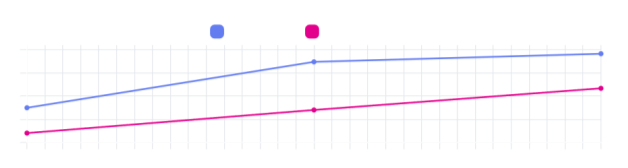
Here’s a quick visual of Brent vs WTI around the current escalation. The chart highlights 28 February 2026 (the day after the US–Israel strikes on Iran) to show how prices reacted.

Brent vs WTI oil price movement during the February–March 2026 escalation

What’s plotted (sourced snapshots)

  • 27 February 2026 (pre-escalation settle): Brent $72.48/bbl, WTI $67.02/bbl.
  • 01 March 2026 (early Asian trade / Sunday night US): Brent briefly reached $82.37/bbl; WTI traded around $72/bbl. Petroleum prices reacted to economic and geopolitical uncertainty
  • 03 March 2026 (latest snapshot): Brent $84.13/bbl; WTI $76.67/bbl. Asia-Pacific outlook darkens as tensions jolt markets
  • Event marker – 28 February 2026: Conflict escalation disrupted shipping routes and pushed a “war premium” into global oil prices. Iran conflict has financial markets preparing for oil price shock

Note: These are reported price snapshots rather than full intraday series. They illustrate the direction and magnitude of the price movement during the first days of the crisis.

Vanuatu Retail and Wholesale Petrol and Diesel Prices 7th April 2025

The retail petrol (Mogas) prices show a slight increase by +4VT/L over the last 5 months (December 2024 to April 2025). The retail mazut (ADO) price was 162 VT/L in December 2024 and is up by +3 VT/L to 165 VT/L in April 2025. As of April 2025 the retail price of petrol is at 180 VT/L while the wholesale price is at 167 VT/L. For diesel, in April 2025, the retail price is 165 VT/L and the wholesale price is at 152 VT/L.

Read more …

Vanuatu’s National Electrification Master Plan (NEMP): Final Workshop

The final workshop of the Vanuatu National Electrification Master Plan (NEMP) has been a success, with around 40 people attending the event in person from Port Vila, and over 20 people connecting virtually to a full morning dedicated to the country's electrification needs.

Read more …

  1. Article 6 Fund Endorsed of North Efate grid extension
  2. Vanuatu’s first carbon credit market signed
  3. “Petrol, Diesel and LPG Price Forecast”
  4. Solar Rooftop Self Generation - A Way Forward for Vanuatu

Page 1 of 13

  • 1
  • 2
  • 3
  • 4
  • 5
  • 6
  • 7
  • 8
  • 9
  • 10

Latest

  • An Update On The Middle East Conflict Affecting Global Fuel Prices
  • Here are 12 tips for vehicle users in Vanuatu
  • Global Gas Market Trend THrough Middle East
  • Vanuatu Retail and Wholesale Petrol and Diesel Prices 7th April 2025
  • Vanuatu’s National Electrification Master Plan (NEMP): Final Workshop
  • Article 6 Fund Endorsed of North Efate grid extension
  • Vanuatu’s first carbon credit market signed
  • “Petrol, Diesel and LPG Price Forecast”
  • Solar Rooftop Self Generation - A Way Forward for Vanuatu
  • Government Advances Process to Establish Vehicle Emission and Fuel Standards for Vanuatu
  • FIFTH PACIFIC REGIONAL ENERGY AND TRANSPORT MINISTERS’ MEETING
  • FUEL PRICE DROP FOR BENZINE AND MAZUT
  • Vanuatu Validates National Energy Efficiency Strategy and Action Plan
  • Retail Price of Benzine goes up
  • “Diesel Price Increase to 253VT/L”
  • “Diesel Price Increase to 229VT/L”
  • Launching of renewable energy and green economy trainings for remote rural communities in Vanuatu
  • “Diesel Price Increase”
  • Energy Efficiency – Key Enabler to address covid19 pandemic and increasing fuel price
  • “Petroleum Price Increase”
  • BRANTV Awarded National Energy Globe Winner 2021.
  • Switzerland and UNDP to deploy $42 million to boost private climate investments that advance socio-economic development in developing countries
  • Praes blo mazut I go antap lo manis Maj 2022
  • VT3.5B for Sarakata Additional Hydropower Facility
  • Vanuatu Signs Bilateral Agreement with Switzerland
  • UNELCO brings power to Malafau
  • Rural communities to benefit from OGCIO, Energy Partnership
  • New fuel and LPG prices
  • VUI pays its First Concessional Contribution (Fee) to the Vanuatu Government
  • Brenwei Hydro - VEAP Ground Breaking
  • Vanuatu government pays off Concessional Assets for Malekula Concession
  • BRANTV Photovoltaic (PV) Solar Local Operator Training Program Supported by Pacific Centre of Renewable Energy and Energy Efficient (PCREEE)
  • Concessional Asset Payment for Tanna Concession
  • Fuel Price Increase - 12 April 2021
  • VT63 million for Sarakata Hydroelectric Power Plant detailed design stage
  • Vanuatu launches country’s first-ever community-run solar station
  • Wintua/Lorlow Solar PV Mini Grid Launching
  • Empowering women through green energy
  • Lamenaura Primary School lights up with green energy
  • Community-scale solar Photo-Voltaic system for Pentecost communities
  • Vanuatu’s Actions to Mitigate Climate Change
  • Renewable energy for clean environment and community benefits in Vanuatu
  • VREP product updated April 2020
  • Bid evaluation results for Tender T&D 02/2019
  • Vanuatu gets closer to addressing energy efficiency in its land transport sector
  • SEAV establishes new committee
  • Brenwe hydro contract signed
  • Opening of Training on Pico Micro Hydro Designs and Installations Organized by BRANTV Project, Department of Energy, 6th January 2020
  • SEIAPI trainees urged to utilise skills in PV Solar
  • Power to off-grid communities: Innovative approach tested on Lelepa island
  • BRANTV Project Install its first Demo of Community-Scale PV Solar System by SEIAPI Trainees at Utanlangi Village, Nguna island
  • National Green Energy Fund (NGEF or Fund) Signs MOU with the Office of the Registrar of Cooperatives and Business Development Services
  • BRANTV Project launches its Train-the-Trainers Workshop for Solar Photovoltaic Technicians in Vanuatu
  • National Energy Road Map 2016-2030 Implementation Plan (NERM-IP) launched
  • Vanuatu attends Resilience and Sustainable Development workshop
  • BRANTV Project Stakeholders briefed about Free, Prior and Informed Consent
  • Public Institutions on West Maewo electrified through hydro power
  • Gov't Signs Concession Agreement with VUI
  • MoCCA farewells outgoing DG Jesse Benjamin
  • Energy Efficiency for Vanuatu
  • MOU Between the MoPPC and Societe De Service Petroliers
  • Pacific Petroleum launches Fuel Station on Malekula
  • Fuel stations opens on Tanna
  • Payment Options included for Subsidized Solar Lights

Contact Us

Meteo Complex, Nambatu Area, PMB 9067
Port Vila Vanuatu

Landline: (678) 25201

E-mail: doe@vanuatu.gov.vu

Facebook: www.facebook.com/DoE.Vanuatu

Twitter: www.twitter.com/DoE_Vanautu

Copyright Simpli - Best Free Joomla Template. Designed by JoomlArt.com. Modified for use by the OGCIO, Government of Vanuatu

Other Related Sites

  • Government of Vanuatu
  • Vanuatu Project Management Unit
  • Vanuatu Meteorological & Geohazards Department
  • Department of Environmental Protection & Conservation
  • Ministry of Lands and Natural Resources
  • Utilities Regulatory Authority
  • Unelco
  • Vanuatu Utilities & Infrastructure
  • Origin Gas

Our Location

⚠️ Beware of fake websites pretending to be official. Always check the domain carefully as official Vanuatu Government sites end with .gov.vu.